Are premium cooling fabrics worth the price tag? We dissect the physics behind Nike’s Radical AirFlow, Adidas HEAT.RDY, and the groundbreaking CLIMACOOL 3D technology that helped Sibusiso Kubheka shatter the 100km world record — so you don’t waste money on gear that doesn’t work for YOUR conditions.
The $200 Question: Is the “Cooling Arms Race” Real Science or Just Marketing?
If you’ve walked into a running store lately, you’ve seen the aggressive claims. Nike promises a shirt that “feels like a windstorm strapped to your torso.” Adidas boasts fabrics that “regulate body temperature” and “cut sweat.” With price tags climbing past $80 for a singlet, recreational athletes are left wondering: is any of this backed by real textile science, or are we just paying for clever slogans?
The answer — as with most things in sports science — is both. Recent breakthroughs from Nike and Adidas represent genuine engineering advances, but they’re wrapped in marketing myths that can lead everyday runners to buy the wrong gear for the wrong conditions. Here’s the unfiltered truth.
Nike Radical AirFlow: The “Holey Shirt” That’s Half Genius, Half Hype
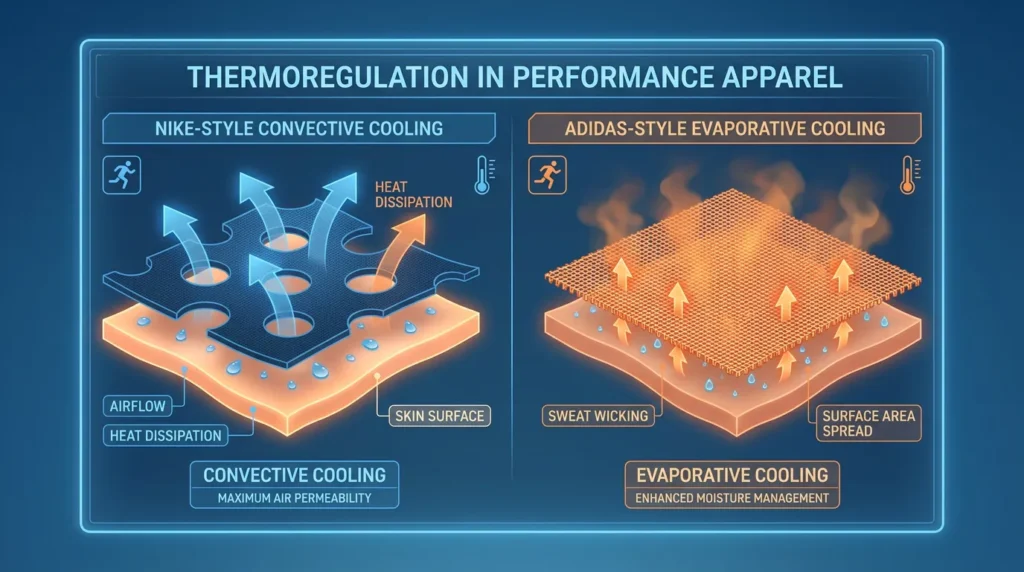
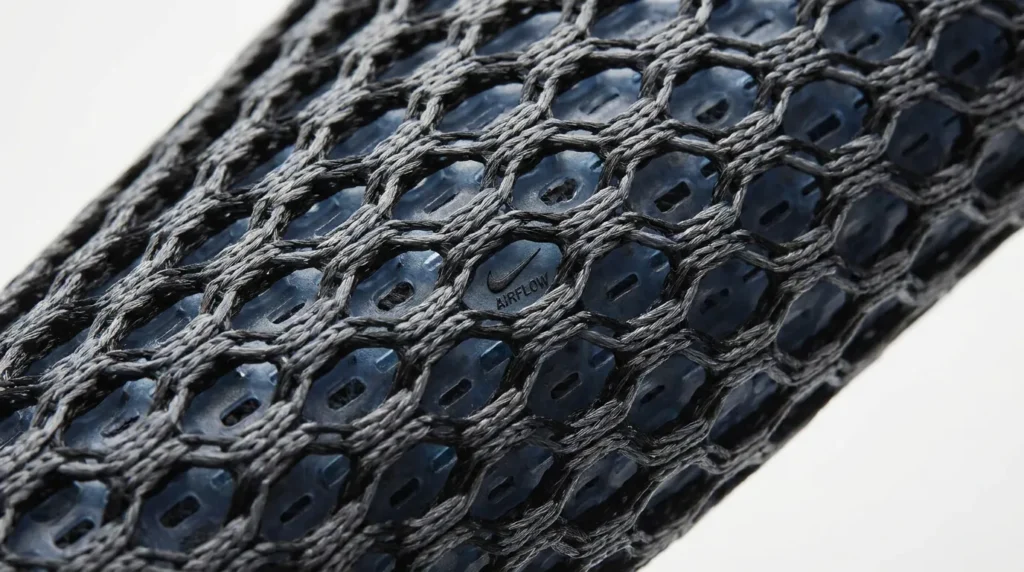
Debuted in late 2025 for trail running, Nike’s Radical AirFlow system uses an ultra-breathable open-hole knit construction paired with a “stand-off textile” design. Nike claims the fabric absorbs and retains 50% less sweat after prolonged running.
✅ The Scientific Truth: The “Stand-Off” Effect
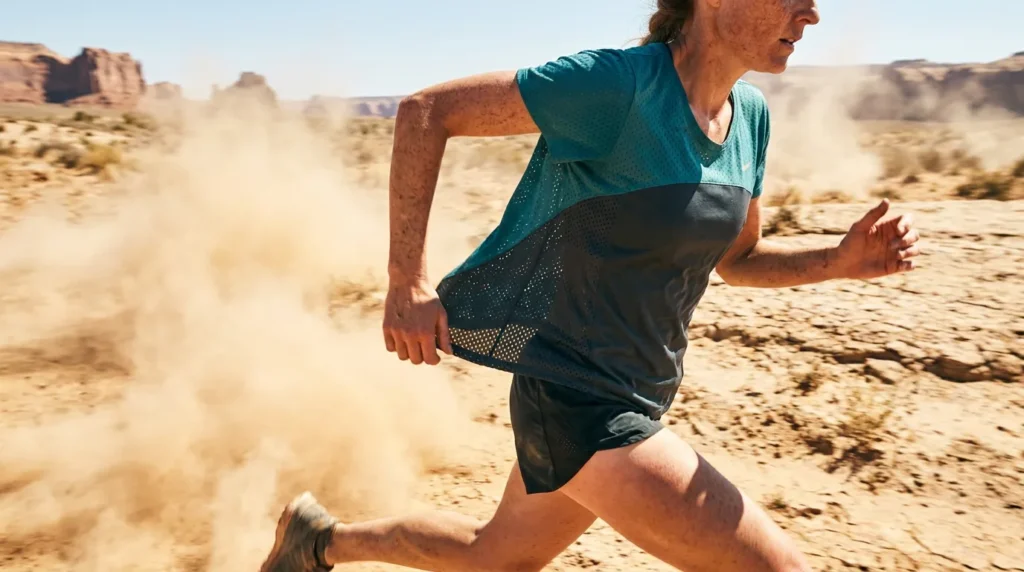
The stand-off textile is a legitimate application of 3D spacer knitting. By preventing the fabric from clinging to wet skin, it eliminates the dreaded “greenhouse effect” — where a soaked shirt traps radiant heat against your body. This allows ambient air to physically strike your skin, maximizing convective cooling (heat transfer via air movement). In windy, dry conditions, this design genuinely outperforms traditional tight-weave fabrics.
❌ Myth #1: “Absorbing 50% Less Sweat” Is Always Better
From a thermodynamics perspective, this claim is a double-edged sword. Evaporative cooling requires the fabric to hold a microscopic layer of moisture to act as a heat sink. If the fabric holds almost no water, sweat simply drips off your body. Dripping sweat cools you 0% — it only dehydrates you faster. In humid environments, a fabric that retains some moisture actually performs better.
❌ Myth #2: The “Windstorm” Sensation
The fabric is entirely passive — it generates zero air movement. If you’re running in zero-wind, high-humidity conditions (think Miami in August), those massive holes will simply let hot, wet air touch your skin, offering virtually no cooling benefit compared to a high-surface-area micro-mesh.
Adidas HEAT.RDY & AEROREADY: Body-Mapped Brilliance With a Catch
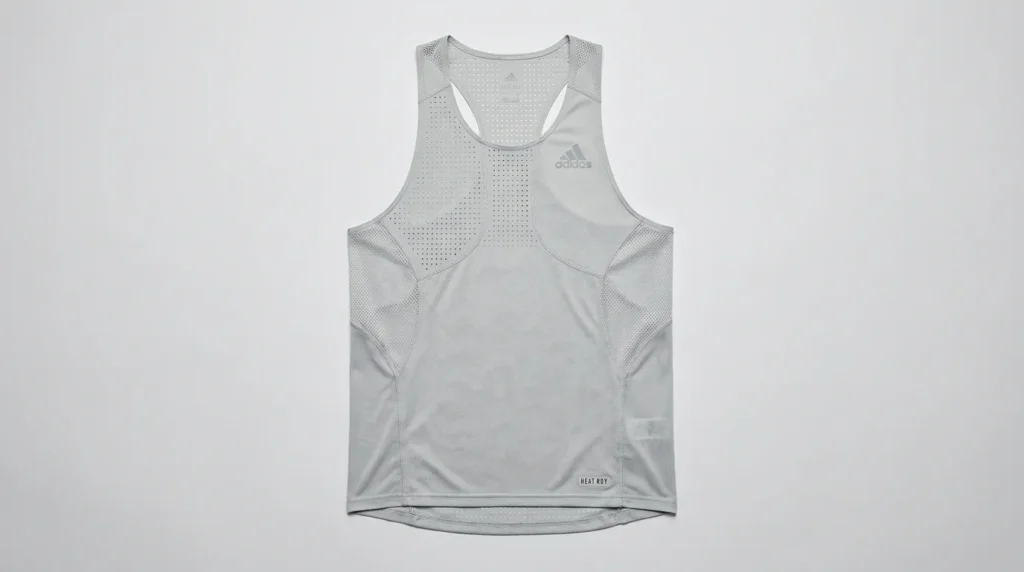
Adidas counters with two complementary systems: HEAT.RDY (premium tier for extreme heat, using laser-cut holes and mesh panels mapped to the body’s hottest zones) and AEROREADY (standard moisture-wicking using capillary action). Adidas claims these systems “maximize airflow,” “cut sweat,” and “regulate body temperature.”

✅ The Scientific Truth: Body-Mapping Works
Placing macro-mesh exactly over the upper back, chest, and underarms targets the body’s highest sweat-gland density. This optimizes the surface area for evaporation exactly where core temperature rises fastest. It’s a scientifically sound design strategy that genuinely outperforms uniform-fabric construction.
❌ Myth #3: “Airflow” and “Wicking” Are the Same Thing
Marketing often treats these as interchangeable, but they are completely different physical mechanisms. AEROREADY relies on capillary action (spreading liquid sweat across a wide surface area to evaporate), while HEAT.RDY relies on macro-ventilation (letting air pass through holes). A fabric cannot maximize both simultaneously — a hole in the shirt provides zero surface area for wicking.
❌ Myth #4: Fabrics “Regulate” Body Temperature
This implies an active mechanism, like Phase Change Materials (PCM/Outlast). These fabrics are entirely passive. They do not regulate temperature — they merely facilitate your body’s natural evaporative cooling. If your body stops producing sweat, the shirt stops cooling. Period.
Breaking News: Adidas CLIMACOOL 3D Powers Sub-6-Hour 100km World Record
In a stunning demonstration of textile engineering, South African runner Sibusiso Kubheka recently became the first human to break the 6-hour barrier in the 100km distance — and Adidas’s latest cooling innovations played a central role. The gear developed for this attempt reveals where the industry is heading next.
The CLIMACOOL Pre-Cooling & Per-Cooling System
Before the race, Kubheka used a cooling vest combined with a CLIMACOOL insulating fan jacket — the same technology worn by the Mercedes-AMG Formula 1 team. This minimized his core temperature and heart rate in the critical first hour of performance. During the race, he used custom-molded cooling necks designed to sit directly over the main arteries and veins for maximum thermal exchange.
What this means for you: Pre-cooling is scientifically proven to improve endurance performance in heat. You don’t need F1-level gear — a simple ice vest or cold towel on your neck before a hot race can drop your core temperature by 0.5°C and delay fatigue significantly.
The Clima 3D Singlet: Next-Gen Body Mapping
The Clima 3D singlet features newly developed CLIMACOOL 3D embossed material technology, body-mapped to areas with the highest skin contact and sweat production. The 3D embossing creates a physical stand-off layer (similar to Nike’s approach) while maintaining high-surface-area micro-channels for capillary evaporation. This hybrid approach will be available to consumers in 2026.
TechFit Short Tights: Compression Meets Cooling
Kubheka’s TechFit tights featured stiffening bands strategically placed based on his individual body composition to stabilize the hips and support running economy under fatigue. This represents a shift from “one-size-fits-all” apparel to biomechanically personalized gear.
The Ultimate Comparison: Which Technology Wins in Your Conditions?
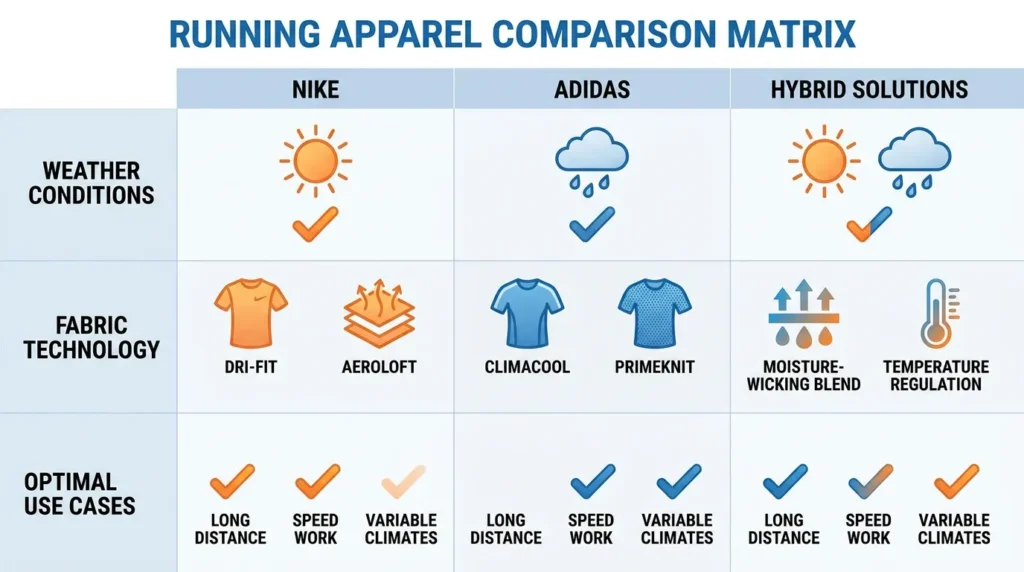
There is no single “best” cooling fabric. The right choice depends entirely on the physics of your environment. Here’s the science-based decision matrix:
| Scenario | Recommended Technology | Scientific Reasoning |
|---|---|---|
| High Heat, Low Humidity, High Wind (e.g., Desert Trail Running) | Nike Radical AirFlow (Open-Hole/Stand-off) | In dry air, sweat evaporates instantly. The large holes allow maximum convective airflow to strike the skin, and the “stand-off” design prevents the shirt from becoming a heavy, wet blanket. |
| High Heat, High Humidity, Still Air (e.g., Tropical Summer) | Adidas HEAT.RDY / AEROREADY (Zoned Micro-Mesh) | In high humidity, sweat won’t evaporate easily. You need a fabric that spreads the sweat out as thin as possible (high surface area) to force evaporation, rather than just letting hot, humid air pass through giant holes. |
| High-Intensity Interval/Speed Work | Adidas AEROREADY (High-Capillary Wicking) | During intense effort, sweat production outpaces evaporation. You need maximum capillary action to move liquid away from the skin rapidly to prevent chafing and the “sloshing” effect. |
| Ultra-Endurance Events (50km+) | Adidas CLIMACOOL 3D (Hybrid 3D Embossed) | The hybrid approach combines stand-off airflow with capillary wicking — ideal for multi-hour efforts where both convective and evaporative cooling are needed. |
| Race Day in Extreme Heat | Pre-Cooling + Lightweight Singlet | As proven by Kubheka’s 100km record, pre-cooling your core before the start provides a bigger performance benefit than any fabric alone. |
What This Means for Your Wallet: 5 Rules for Smart Athletes
- Don’t buy “cooling” gear for cold-weather running. The same technology that keeps you cool in Dubai will make you hypothermic in Boston. Seasonal specificity matters more than brand loyalty.
- Match fabric to humidity, not just temperature. A $90 Nike Radical AirFlow shirt is a waste of money if you primarily run in Florida summers. Buy Adidas AEROREADY for humid climates.
- Pre-cooling beats any fabric. Before spending $100 on a tech singlet, try a $15 ice neck gaiter and a cold towel before your next hot race. The science is undeniable.
- Body-mapping is worth the premium. If you can afford it, zoned ventilation (mesh where you sweat, solid where you don’t) outperforms uniform fabric every time. This is one marketing claim that’s actually true.
- Beware “active cooling” claims. Unless the garment has a battery, phase-change material, or Peltier element, it cannot actively cool you. It can only facilitate your body’s own cooling. Adjust your expectations accordingly.
Frequently Asked Questions
Does Nike Radical AirFlow really keep you cooler?
Yes — but only in dry, windy conditions. In high humidity with no wind, it performs no better than a $20 mesh tank top. The stand-off design is genuinely innovative, but it’s not a universal solution.
What’s the difference between Adidas HEAT.RDY and AEROREADY?
HEAT.RDY uses macro-ventilation (holes and mesh) for airflow. AEROREADY uses capillary action (micro-fibers) for moisture wicking. They’re complementary, not interchangeable. HEAT.RDY is the premium tier for extreme heat.
Is the Adidas CLIMACOOL 3D singlet available to consumers?
Yes, the CLIMACOOL 3D embossed technology is scheduled for consumer release in 2026. It represents a hybrid approach combining Nike-style stand-off airflow with Adidas-style capillary wicking.
Can any fabric actually lower my body temperature?
No. Passive fabrics cannot lower your core temperature — they can only help your body shed heat more efficiently. The only way to actively cool your core is through pre-cooling (ice vests, cold towels) or phase-change materials, which have limited duration.
What’s the best cooling gear for marathon runners?
For most marathon conditions (moderate heat, variable humidity), a body-mapped singlet like Adidas HEAT.RDY offers the best balance of airflow and moisture management. Add a cooling neck gaiter for races above 25°C (77°F).
The Bottom Line
The cooling arms race between Nike and Adidas has produced real textile innovation — but also real marketing nonsense. The “ultimate” apparel doesn’t exist as a single product. It exists as a system matched to your specific environment.
Before you drop serious money on premium gear, ask yourself three questions: What’s my typical humidity? Do I usually run in wind? How long are my efforts? The answers will tell you whether you need Nike’s convective airflow, Adidas’s capillary wicking, or the emerging hybrid technologies like CLIMACOOL 3D.
And remember: no fabric can outperform the basics. Stay hydrated, acclimate to heat gradually, and consider pre-cooling before your next big race. That’s the real science that separates personal records from DNFs.
Have questions about specific gear for your training conditions? Drop a comment below — we’ll break down the science for your specific climate and distance.